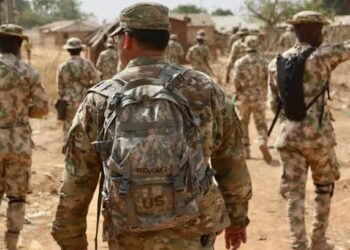

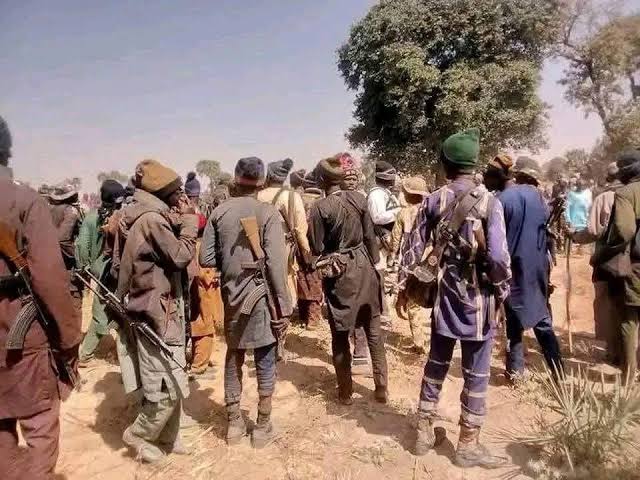
For millions of Nigerians, fear has become part of daily life. It follows people to markets, schools, farms, and highways. Simple routines, travelling at night, returning from work, visiting loved ones, now carry the risk of ambush, abduction, or death. Armed bandits, criminal gangs, and “one-chance” vehicle operators have turned vast areas of the country into danger zones.
What once appeared as isolated incidents has grown into a nationwide crisis. Bandit groups, particularly active in the North-West and North-Central regions, regularly invade rural communities, overpower poorly armed local defenders, kill residents, and abduct others for ransom. Entire villages have been emptied as families flee repeated attacks.
Faith, Conflict, and International Attention
Beyond banditry, some of the violence has been framed as religiously motivated, especially against Christian communities. Church attacks, mass killings, and targeted abductions have reinforced this narrative. In 2025, the Yelwata massacre, where dozens of civilians were killed at a Catholic mission, drew global attention.
The United States, under President Donald Trump, responded by placing Nigeria on its “Country of Particular Concern” list for religious freedom violations. The designation came with warnings of possible aid restrictions and the approval of targeted airstrikes against militant groups accused of attacking Christian communities.
Nigerian authorities have rejected claims of a Christian genocide, insisting the violence affects Nigerians of all faiths and is driven by banditry, insurgency, and organised crime.
The scale of Nigeria’s insecurity was laid bare on Sunday, September 28, 2025, when armed bandits attacked Oke-Ode in Ifelodun Local Government Area of Kwara State. At least 12 people were killed, including forest guards, hunters, vigilantes, and community leaders. Among the victims was the Baale of Ogba-Ayo, Abdulwasiu Abdulkareem.
Homes were ransacked, residents were abducted, and hundreds fled the town. A local vigilante leader, Ajetunmobi, said the community had noticed suspicious movements the night before the attack but received no security response in time.
The incident followed a string of violent episodes across the region. On September 27, 2025, gunmen killed a driver and abducted four passengers in Omu Aran. Days earlier, on September 24, a woman and a teenage girl were kidnapped during a midnight raid in Lafiagi Emirate. Reports of “one-chance” attacks on major highways have also increased, making travel increasingly dangerous.
A Life Marked by Violence
Oluwasegun Lawal, a healthcare assistant, knows the cost of insecurity firsthand. His experience with violence dates back to 2010, when ethno-religious clashes erupted in Jos, Plateau State. He fled alongside thousands as homes were burned and residents were killed.
Years later, he survived a “one-chance” vehicle attack after unknowingly boarding a bus operated by armed criminals. He was robbed and abandoned in a remote area.
“I thought that was the end,” he said. “They took everything and left me there. You never forget that kind of fear.”
After the Jos crisis, Oluwasegun and his wife, Olayemi Salawu, relocated to Oke-Ode in search of safety.
In August 2023, the couple fled their home following repeated attacks on Christian communities in areas familiar to them, where residents reported little or no security intervention. Churches were repeatedly targeted, no arrests were made, and the absence of government support left many Christians feeling vulnerable and unable to practise their faith without fear of attack.
Later in August 2023, the couple left Nigeria for the United Kingdom, seeking stability and safety after years of living under constant threat.
Despite relocating abroad, violence continued to shape their lives and connections back home. During the September 2025 attack on Oke-Ode, areas they are familiar with were directly affected, forcing residents to flee and later return to assess the damage.
“Even when you leave, the fear follows you,” Oluwasegun said. “Your people are still there. Every phone call makes your heart race.”
Grief That Remains Behind
For many residents who stayed, escape was not an option. Rilwan Tajudeen lost his father, a charcoal dealer, who was shot while returning from Oke-Ode market.
“I carried him, trying to stop the bleeding,” Rilwan said. “He died in my arms. I don’t know how you recover from that.”
Gbemisola Muhammed lost her husband, Prince Ishola Muhammed, in an ambush that also claimed the lives of his brother and brother-in-law. The attackers attempted to abduct her sister-in-law, who narrowly escaped.
“They attacked everyone they could,” she said. “No one was spared.”
In nearby Dabu village, Taiye and his wife were abducted, while a popular doctor known as “Baba Gold” and his wife were also taken. Families returned days later to bury the dead and salvage what remained of their homes.
The Oke-Ode attack reflects a wider national pattern. On Monday, January 6, 2026, gunmen attacked staff of Old Oyo National Park, killing at least five forest guards. Across Nigeria, banditry, religiously linked violence, and highway ambushes continue to spread fear.
Security experts point to weak coordination among security agencies, under-equipped local defenders, and deeper socio-economic factors such as poverty, unemployment, and illegal mining, which allow armed groups to operate with relative ease.
Kwara State Governor AbdulRahman AbdulRazaq condemned the killings and called for urgent military reinforcement, directing the General Officer Commanding of the 2 Division to temporarily relocate to the state. Police spokesperson Adetoun Ejire-Adeyemi confirmed the attack and said joint operations involving the military and forest security units were ongoing.
For survivors and those forced to flee, official assurances offer little comfort. Whether living in Nigeria or watching events unfold from abroad, families like the Lawals remain bound to a country where insecurity continues to shape lives, decisions, and futures.