
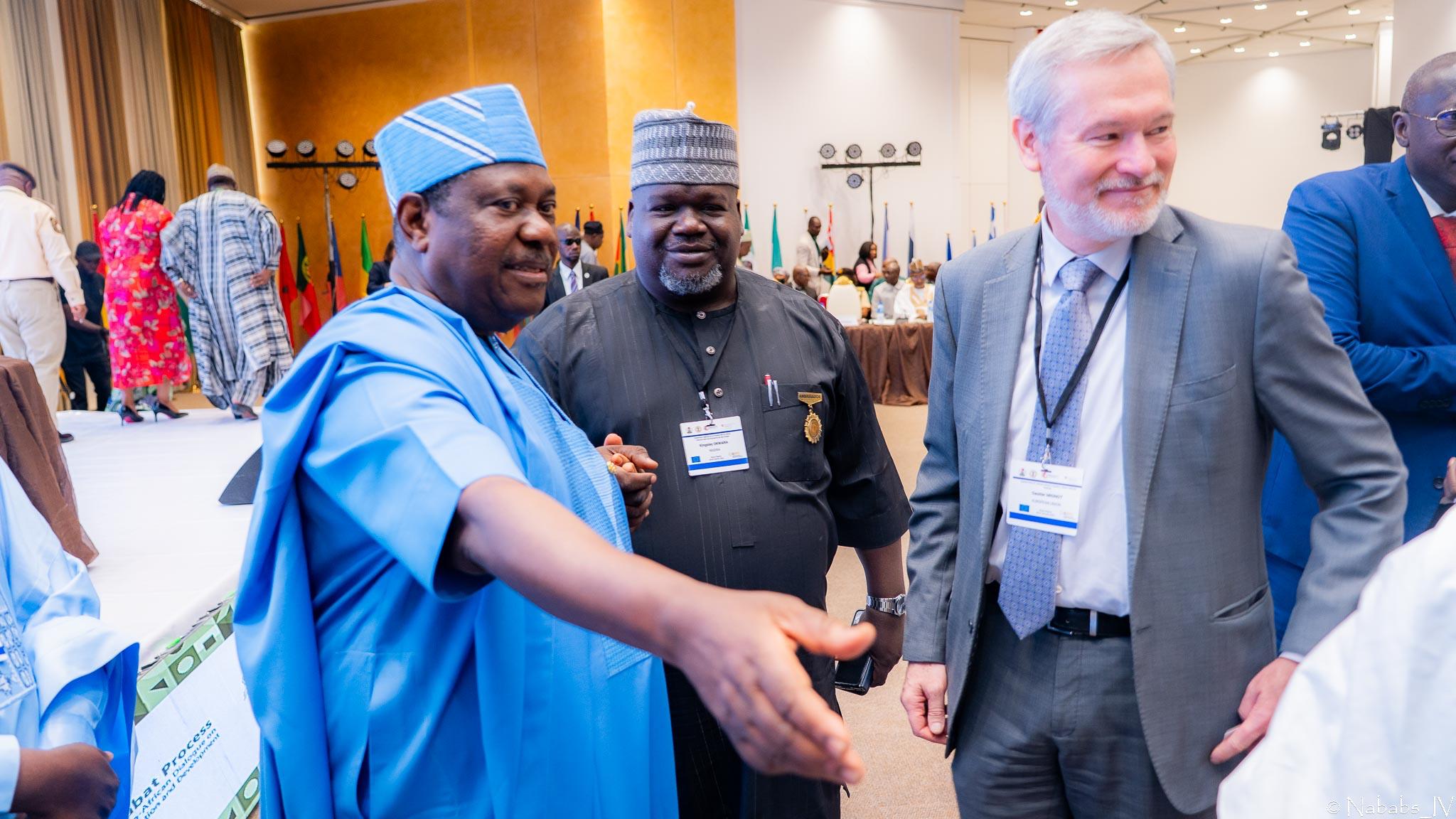
28 January 2026 | Abuja, Nigeria
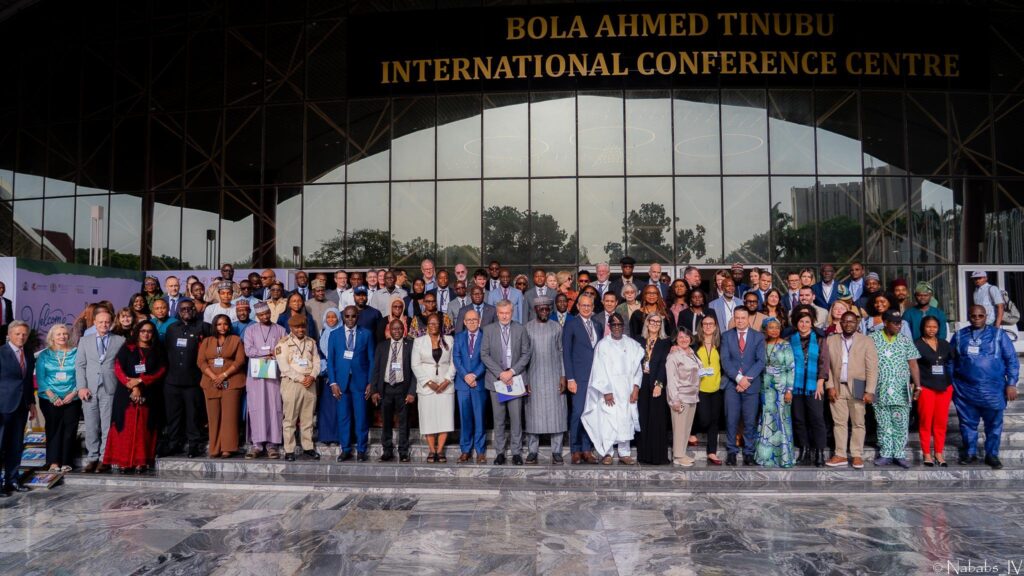
International Conference Centre, Abuja
1. Background and Context
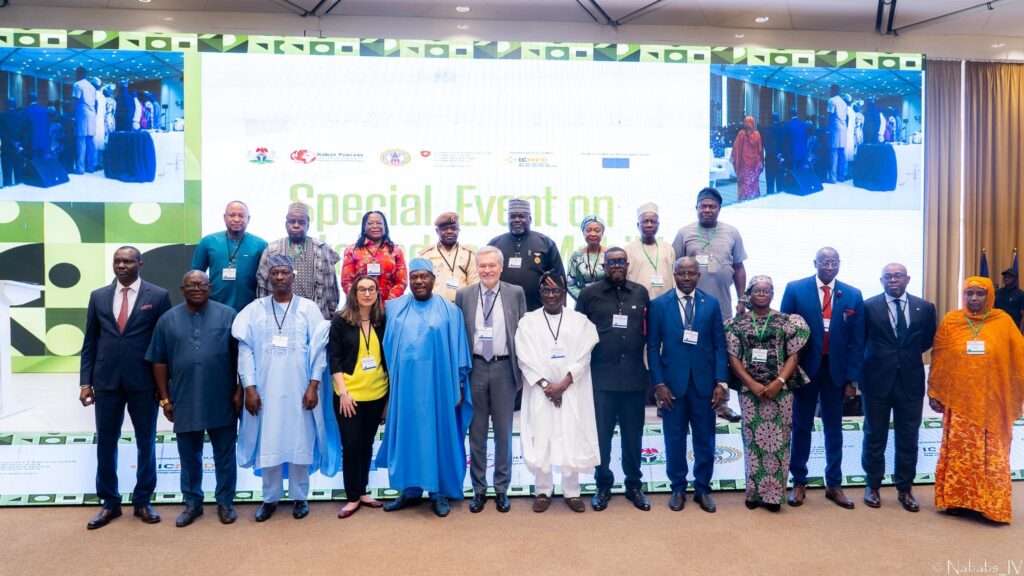
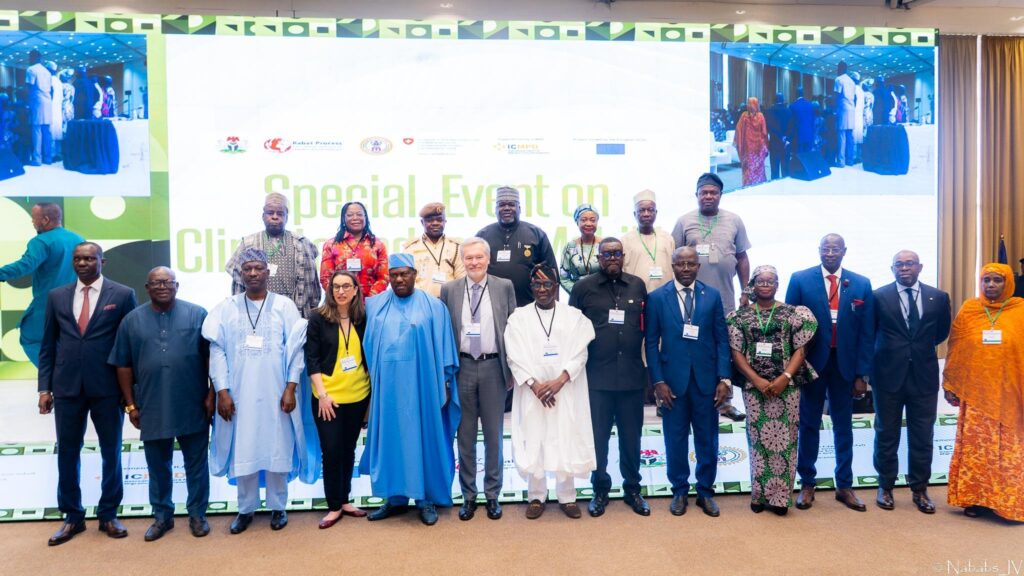
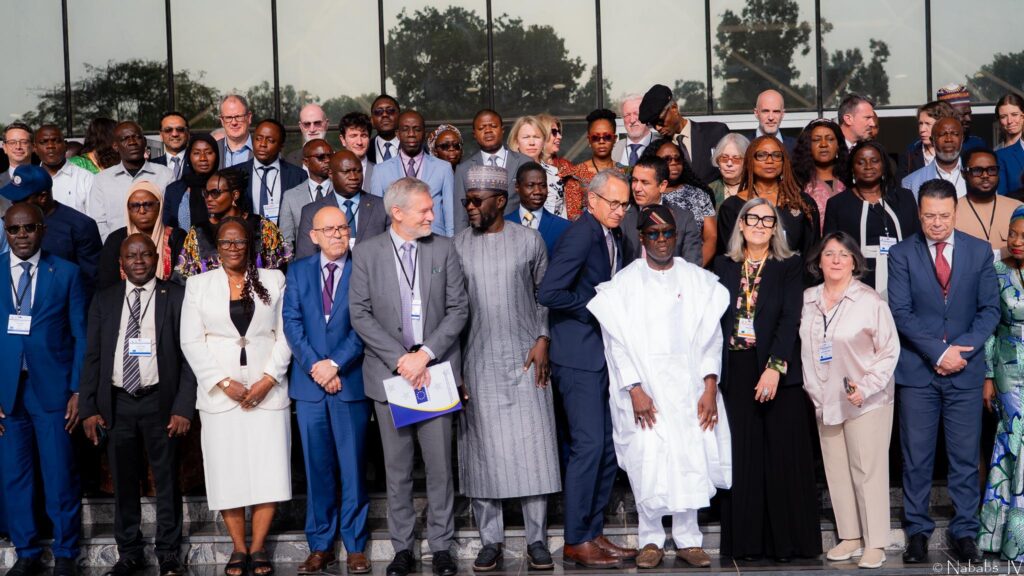
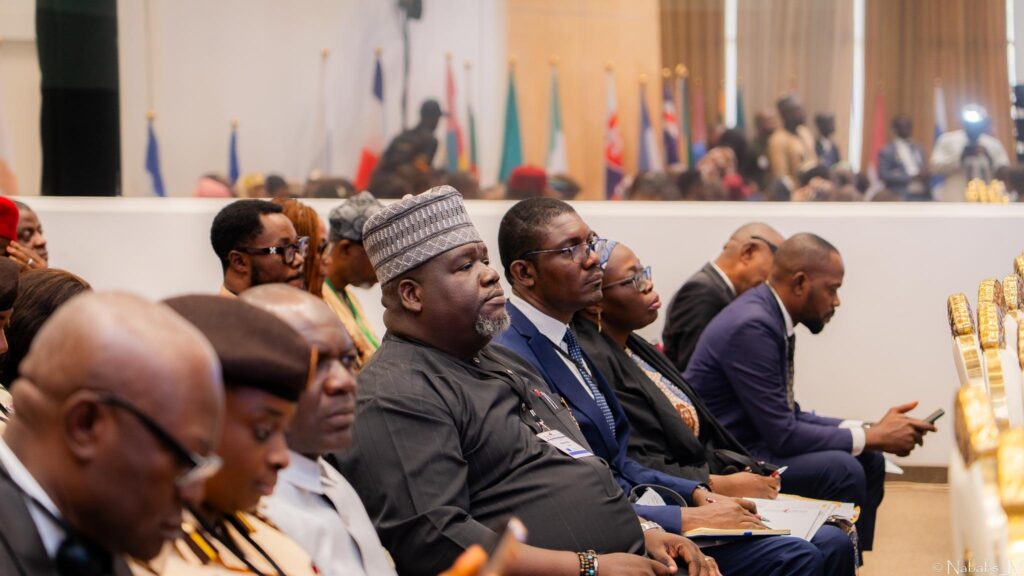
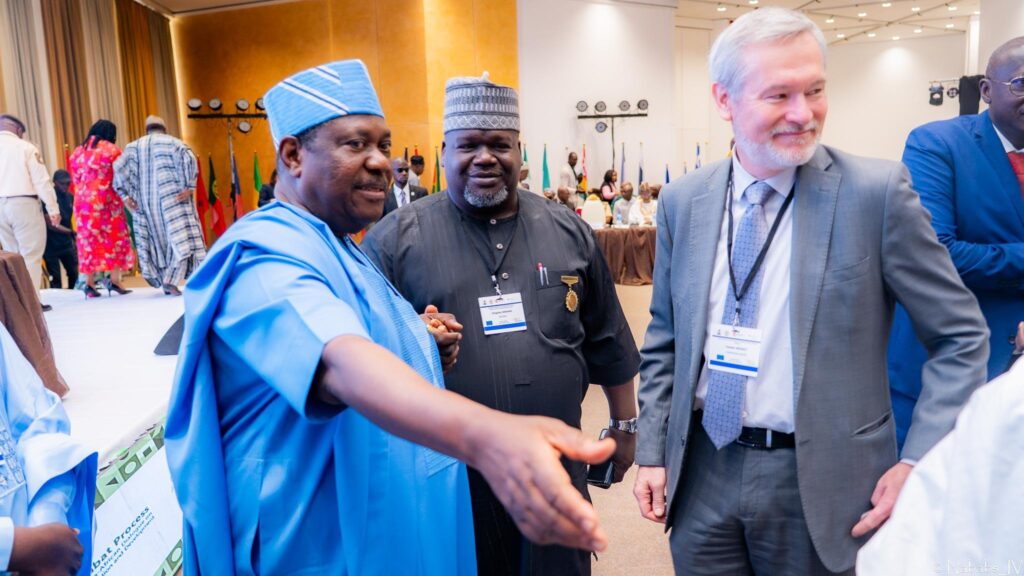
The Special Event on Climate-Induced Mobility was convened on 28 January 2026 in Abuja, Nigeria, within the framework of the Rabat Process, bringing together partner countries and international stakeholders to examine the growing nexus between climate change, human mobility, and human rights. The event focused on advancing evidence-based, rights-centred, and anticipatory policy responses to climate-induced displacement across the 57 partner countries of the Rabat Process.
FR_Agenda. Special Event_Climate Induced Mobilty. 28. 01.2026.pdf None
2. Hosting and Organisation
The event was organised under the co-presidency of the Federal Republic of Nigeria and the Swiss Confederation, within the EU-Africa Dialogue on Migration and Mobility (MMD).
The programme was funded by the European Union and implemented by the International Centre for Migration Policy Development (ICMPD).
FR_Agenda. Special Event_Climate Induced Mobilty. 28. 01.2026.pdf None
3. High-Level Representation and Opening Session
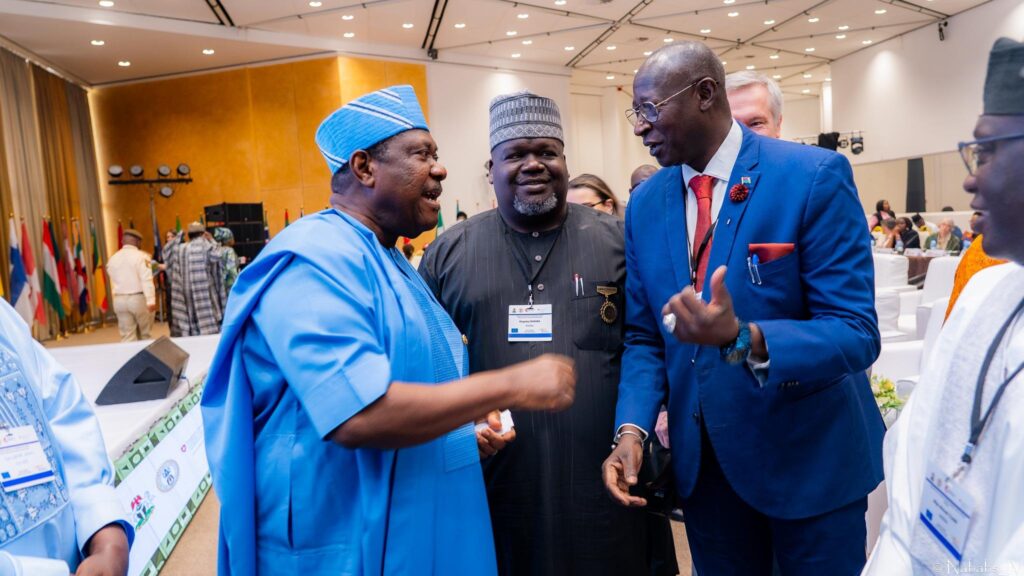
The opening session featured high-level political and diplomatic representation, underscoring the strategic importance of climate-induced mobility at national, regional, and international levels.
His Excellency President Bola Ahmed Tinubu, President of the Federal Republic of Nigeria, was ably represented by the Secretary to the Government of the Federation, Senator George Akume, in his capacity as host nation representative.
Barr. Omotenioye Majekodunmi, Director-General, National Council on Climate Change (Nigeria).
Ms. Cristina Probst-Lopez, Head of International Cooperation, Swiss State Secretariat for Migration (SEM), Department of Justice and Police (Co-Presidency).
H.E. Gautier Mignot, Ambassador of the European Union to Nigeria and ECOWAS.
Economic Community of West African States (ECOWAS) – representation announced (to be confirmed).
FR_Agenda. Special Event_Climate Induced Mobilty. 28. 01.2026.pdf None
4. Participation of International Experts and Institutions
The event brought together senior experts and officials from the United Nations system, international organisations, development agencies, and research institutions, including:
Robert Beyer, Data Scientist and Analyst, International Organization for Migration (IOM).
Prof. Elisa Morgera, UN Special Rapporteur on Human Rights and Climate Change.
Shana Tabak, Director, Climate Mobility Programme, Carnegie Endowment for International Peace.
Andrew Harper, Special Adviser on Climate Action, UN High Commissioner for Refugees (UNHCR).
Ian Fry, Ambassador for Climate Change and Environment, Tuvalu, Former UN Special Rapporteur.
Samuel Simón Pulido, Head of Migration and Forced Displacement, DG INTPA, European Commission.
Margaret Njuguna, Regional Adviser on Disaster Displacement, Internal Displacement Monitoring Centre (IDMC).
Lilian Seffer, Programme Lead, Climate Mobility and ECOWAS Component, GIZ.
Alice Ochsenbein, Regional Adviser on Migration and Development, Swiss Agency for Development and Cooperation.
Iniobong Abiola-Awe, Director, Climate Change Department, Federal Ministry of Environment, Nigeria.
FR_Agenda. Special Event_Climate Induced Mobilty. 28. 01.2026.pdf None
5. Key Deliberations
Discussions focused on:
The impact of slow-onset and sudden-onset climate events on internal and cross-border mobility.
Protection frameworks and human-rights-based responses to climate-induced displacement.
Strengthening in-situ resilience and safe, regular migration pathways.
Integrating climate considerations into national development, migration governance, and adaptation strategies.
6. Institutional Participation
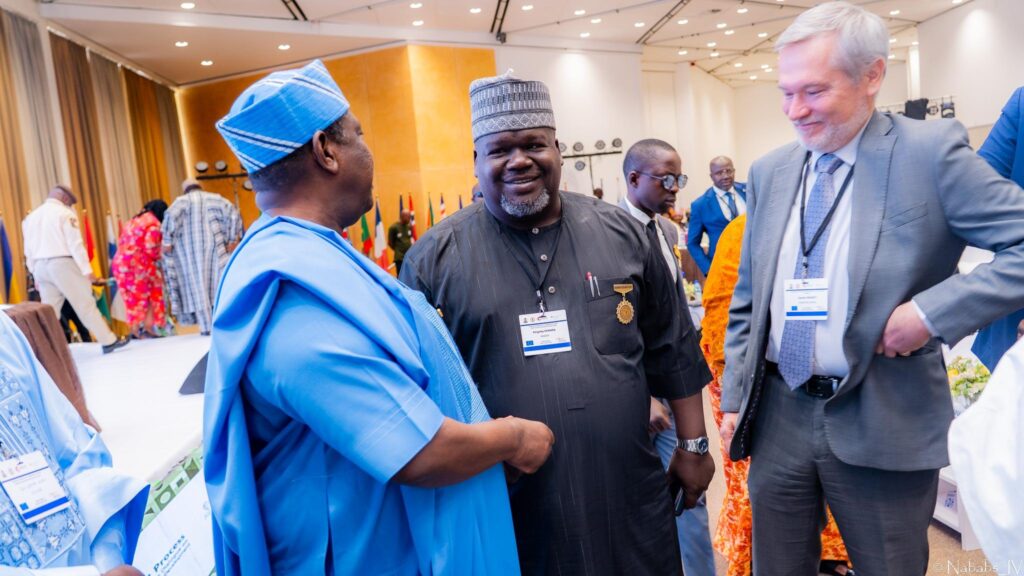
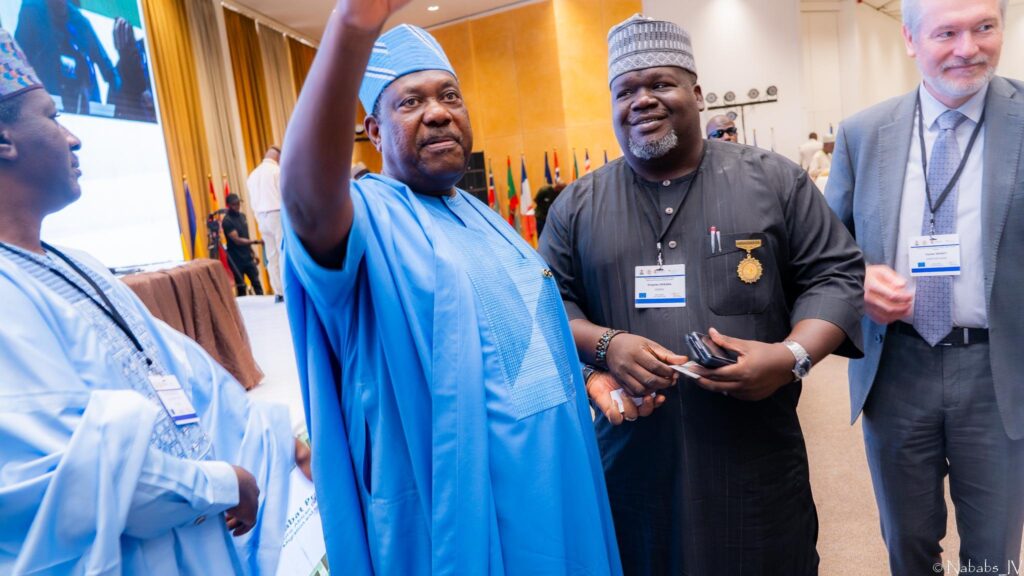
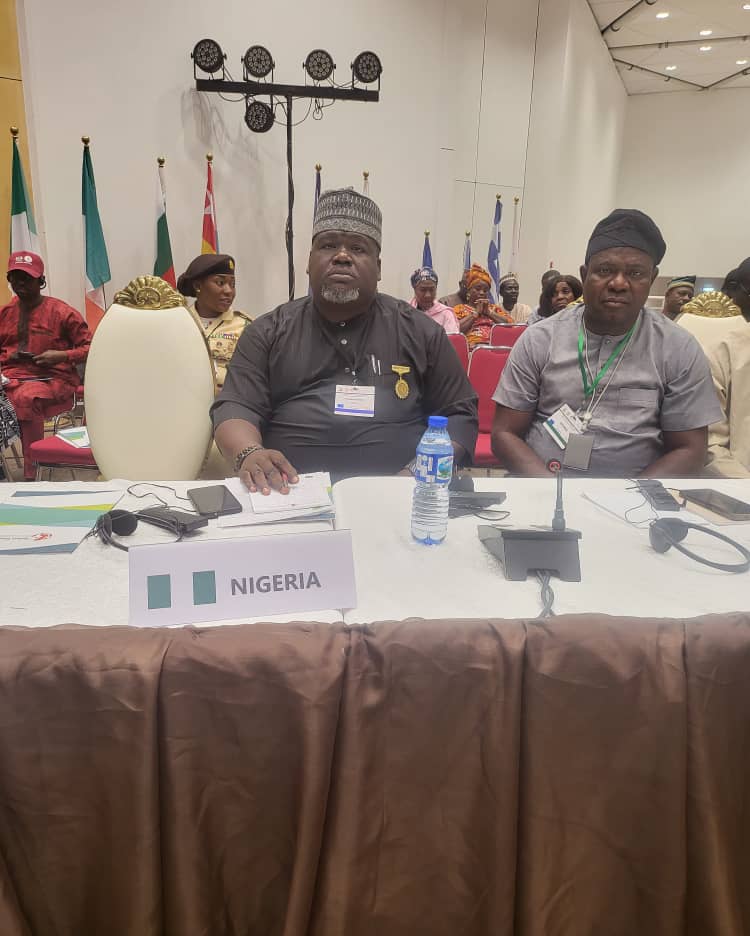
The event also witnessed the participation of regional and international diplomatic actors, including the Institute of Economic, Social and Cultural Affairs (I-ECOSOC) and the African Union Agenda 2063 Ambassadorial Assembly, represented by:
Amb. Dr. Engr. Kingsley Okwara
Director-General, Institute of Economic, Social and Cultural Affairs (I-ECOSOC)
Acting Head of Mission, African Union Agenda 2063 Ambassadorial Assembly
7. Conclusion
The Special Event reaffirmed the collective commitment of African, European, and international partners to address climate-induced mobility through coordinated, forward-looking, and rights-based approaches. It reinforced the need for sustained multilateral cooperation to strengthen resilience, protect vulnerable populations, and advance the objectives of sustainable development in the context of climate change.