
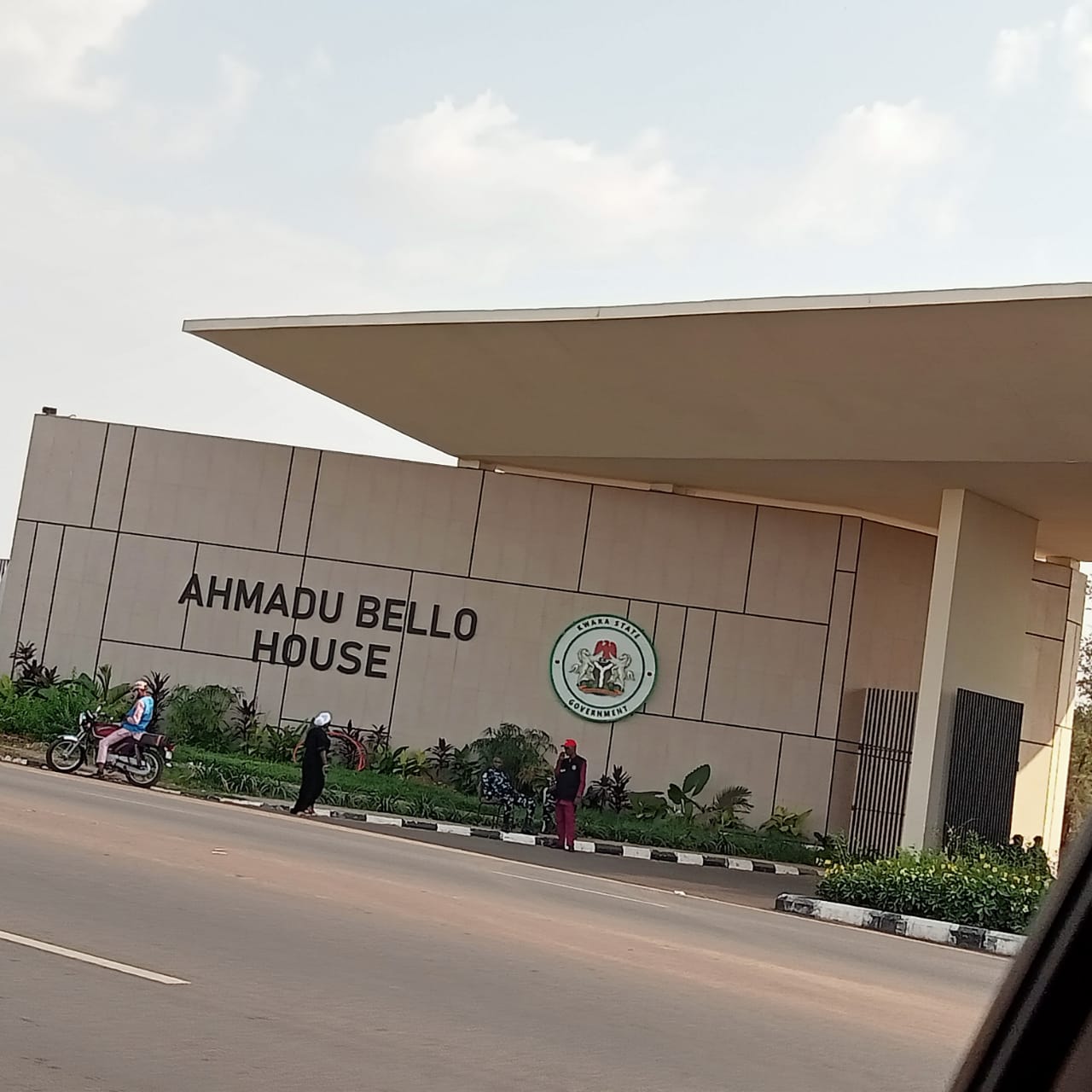
Kwara is tagged “State of Harmony” and we want our Peace – By Professor Funmilayo Adesanya-Davies
Its incredible that in one of the most puzzling moves by a sitting governor in Nigeria’s recent political landscape, the Kwara State Government House has been renamed “Ahmadu Bello House”, honouring the legacy of a historical Northern political leader rather than a local figure or a neutral symbol of state unity.
This narrative is raising serious questions about political messaging, communal harmony, and the priorities of leadership in a state grappling with an acute security crisis in the state and entire country. Kwara State located in North Central, Nigeria consists consists of both Christian and Muslim populations. Again, Kwara is a diverse state with significant Yoruba, Nupe, Bariba, Fulani, etc, populations.
A Symbolic Gesture or a Strategic Misstep?
At first glance, naming a government institution after a revered historical figure can be framed as an attempt to recognise heritage. But this particular decision carries implications that go far beyond mere commemoration.
The disconnect with local sentiment:
Kwara is a diverse state with significant Yoruba, Nupe, Bariba, and Fulani populations. Naming the Government House after Ahmadu Bello —an icon largely associated with Northern Muslim politics—without engaging broad local consultation fuels perceptions of partisan or sectarian governance.
This is especially unfortunate given ongoing debates over naming institutions after indigenous figures, such as the push in some circles to rename the University of Ilorin after Sheikh Alimi ibn Solihu, the founder of the Ilorin Emirate dynasty—a proposal that has generated controversy precisely for its cultural and regional focus.
Irrelevant to current priorities:
Kwara is in the cross-hairs of violent jihadist activity. The state witnessed one of the deadliest attacks in recent Nigerian history on 3–4 February 2026, when at least 162 villagers were massacred in the communities of Nuku and Woro by extremist gunmen after locals refused to embrace extremist interpretations of sharia law.
Reports identified the perpetrators as a faction linked to Islamic State affiliates like Lakurawa, while the president attributed the attack to Boko Haram insurgents. In the face of such carnage, renaming a central government institution after a symbol that some Nigerians associate—fairly or unfairly—with historical Islamic conquest (as in the case of Usman dan Fodio) is not only tone-deaf but deeply insensitive.
Harmful optics amid rising extremism:
The Boko Haram insurgency and ISWAP continue to destabilise Nigeria, killing thousands and displacing millions over more than a decade. These groups use Islamic rhetoric to justify violence and coercion across multiple states, including recent incursions far from their traditional northeastern strongholds.
In this climate, public symbols matter. A government institution bearing the name of an Islamic leader risks being misinterpreted by extremists and exploited by cynics as evidence of a religious agenda, undermining state claims of neutrality and commitment to all citizens regardless of faith.
Kwara’s Self-Defined Identity: Peace or Symbolism?
Kwara prides itself on being a State of Harmony—a slogan intended to reflect peaceful coexistence among its religious and ethnic communities. Honourable in intention, the reality on the ground tells a grimmer story. Kidnapping incidents, banditry, and community displacement have plagued the state, prompting civil organisations and political figures alike to call out security failures and demand urgent interventions.
Against this backdrop, renaming the Government House after a figure with historical Islamic connotations—not one directly tied to local Kwara history, culture, or unity—is perplexing.
If the governor’s aim was genuinely to reinforce harmony, there are more unifying symbols available: inclusive icons of national integrity, leaders of interfaith cooperation, or even neutral names that represent resilience and recovery in the face of insecurity. This is not merely political correctness—it’s good governance.
Symbols carry power. They communicate priorities.
Leadership Must Reflect the Times
The role of a governor is not to signal ideological affinity. It is to protect lives, foster confidence, and unify citizens across divides. In the midst of rising insurgent violence, the government should be asking:
Why are jihadist and armed extremist groups extending their reach into central Nigerian states?
How can the state build resilience and trust among vulnerable rural and urban populations?
What leadership narratives will strengthen unity rather than fuel suspicion?
Renaming government infrastructure after regional or religious figures—especially without broad consensus—risks distracting from these questions.
It inadvertently shifts focus from urgent security reforms to symbolic moves that matter little to an average citizen worried about abduction, terror attacks, or the loss of loved ones to armed violence.
As I write, “Dozens of Muslims ‘massacred’ in Nigeria for refusing to join jihadists, says the governor of Kwara State
23 hours ago in a report by
Makuochi Okafor, BBC Africa, Lagos and Ottilie Mitchell.”
“The attackers burned down shops and homes during the raid on Woro
Dozens of people have been killed in a ferocious shooting attack on two villages in Nigeria’s western state of Kwara after they refused to “surrender to extremists who preached a strange doctrine”, according to the state’s governor.
Governor AbdulRahman AbdulRazaq said on X that “75 local Muslims were massacred” in Tuesday’s raid, while a state lawmaker told the BBC that 78 people had been buried so far and the death toll could rise to an estimated 170 as more corpses were being recovered.
Blaming Islamist militant group Boko Haram for the killings, President Bola Tinubu deployed an army battalion to the affected area. The assault was one of several across Nigeria in the last few days.
In addition to the killings in the villages of Woro and Nuku, 38 people were abducted while others fled and shops and homes were set alight, said Saidu Baba Ahmed, a member of the Kwara state house of assembly.
Among the dead were two sons of the local traditional leader, who also had family members kidnapped, according to local resident Abdulla Umar Usman. The attack began after 17:00 local time and last three to four hours, he told the BBC.
Ahmed said that Boko Haram activity had been gradually increasing in the area, saying the attack was triggered by the community’s rejection of a strict interpretation of Islam. He explained that the Islamist group had written to the community about their arrival, saying they wanted to preach, but residents resisted and deployed local security forces.
A Red Cross official in Kwara, Babaomo Ayodeji, told AFP that “reports said that the death toll now stands at 162, as the search for more bodies continues”. Amnesty International said in a statement that over 170 people had died, noting many were shot at close range and some burnt alive. The human rights group called for an investigation and said there was a “stunning absence of any form of security for the protection of lives”.
In recent months, jihadists – suspected to be from a Boko Haram splinter faction – have been active in Kwara, carrying out targeted killings, often riding in on motorcycles and attacking markets and vigilante groups set up to protect villagers.
In a press release on Wednesday, the state governor said the attack on the two villages was a result of recent counter-terrorism operations in the region.
AbdulRazaq believed it was “apparently to distract the security forces who have successfully hunted down several terrorist and kidnapping gangs”.
Tuesday also saw 21 people being killed in an attack on Doma village in Katsina state in the north, Amnesty said. On the same day 17 people were killed in a series of attacks in the north-eastern Borno state, by suspected Boko Haram militants.
The attacks come alongside the first official acknowledgement from Nigeria of an American troop presence since US President Donald Trump ordered the military in November to prepare for action in Nigeria to tackle Islamist militant groups.
His comments follow those made on Tuesday by Gen Dagvin Anderson of US Africa Command (Africom), who said the deployment followed a Nigerian request and was focused on intelligence support.
“Our partnership with Nigeria is a great example of a very willing and capable partner who requested the unique capabilities that only the US can bring,” he said.
Nigeria faces an array of security challenges including criminal gangs – known locally as “bandits” who loot and kidnap for ransom – an Islamist insurgency, clashes over land and separatist unrest.
The kidnap gangs, jihadists and separatists wreaking havoc in Nigeria
Remaining worshippers kidnapped in Nigeria church abduction freed
The US and Nigerian forces have conducted joint training programmes and exercises for decades.
But the US military has recently become more involved – launching airstrikes on Christmas Day on two camps run by the militant group known as Lakurawa in the north-west.
Late last year, the White House pressed Nigeria’s government to improve security and strengthen protections for Christian communities. Trump had previously explained Christians were being persecuted in Nigeria – an allegation strongly rejected by Nigeria’s government, which said Muslims, Christians and people of no faith were victims of attacks.
There are more than 250 ethnic groups in Nigeria, which is roughly divided into a mainly Muslim north, a largely Christian south, with intermingling in the middle.
In the end, Kwara’s claim to be a “State of Harmony” must be judged by the substance of its policies, not the semantics of its nomenclature. While cultural heritage deserves recognition, leaders must be careful that their gestures do not inadvertently validate extremist narratives or erode public confidence. In times of crisis, unity should not be a slogan etched on a building—it must be the living, breathing commitment of those entrusted with governance.
Professor Funmilayo Adesanya-Davies
Former Presidential Candidate,
Professor of Applied Linguistics,
Political Analyst/ Commentator and IRA Kwara State Princess.