
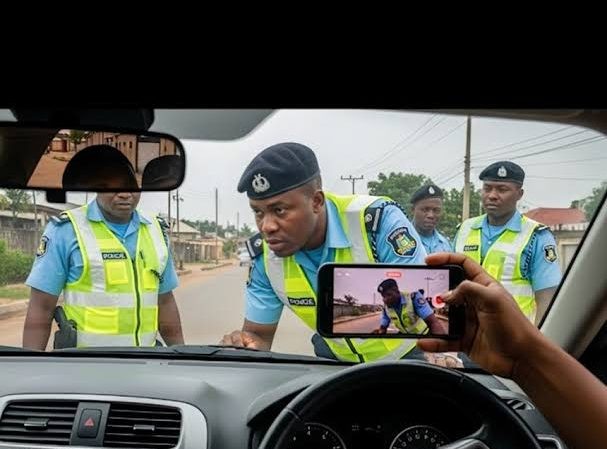
A Federal High Court sitting in Warri, Delta State, has affirmed that Nigerians are legally allowed to record police officers while they carry out their duties in public spaces.
The ruling is seen as a major step toward strengthening accountability within the country’s law enforcement system.
Delivering judgment, Justice H. A. Nganjiwa made it clear that police officers must conduct themselves within the limits of the law when engaging with citizens.
The court stressed that officers are required to wear visible name tags and clearly display their service numbers during operations. This, the judge noted, is necessary to ensure transparency and proper identification.
The court further held that no officer has the right to harass, intimidate, or arrest any individual for recording them in the course of their public duties.
It also ruled against the seizure or destruction of mobile phones used for such recordings, describing such actions as unlawful and a violation of fundamental rights.
The suit was filed by Maxwell Uwaifo, who approached the court after alleging that his rights were breached during an encounter with security operatives. He argued that he was unlawfully targeted while attempting to document police activities.
After reviewing the case, the court ruled in his favour. It awarded him ₦5 million in damages for the violation of his rights. An additional ₦2 million was granted to cover the cost of legal proceedings.
In its decision, the court upheld all the reliefs sought by the applicant. It declared that citizens have the constitutional right to document police actions in public places without interference.
The judgment was anchored on provisions of the 1999 Constitution, particularly those relating to personal liberty, dignity of the human person, and freedom of expression.
Reacting to the verdict, Uwaifo described the outcome as a landmark decision. He said it would promote accountability within the police force and give Nigerians more confidence to stand up for their rights.
The case also brought attention to concerns surrounding stop-and-search operations, where officers often fail to properly identify themselves. The court emphasized that such practices must align with established legal standards.
Those listed as respondents in the matter included the Nigeria Police Force, the Police Service Commission, the Inspector-General of Police, and the Attorney-General of the Federation.
The judgment is expected to set a precedent for future cases involving citizens’ rights and police conduct across the country.