

Across African banking, the conversation is shifting from “inclusion as intent” to “inclusion as performance.” Margin pressure, recapitalisation conversations, digitisation, and tighter risk expectations are forcing a hard question: where will sustainable, low-volatility growth come from in the next cycle? One answer is hiding in plain sight: women-led enterprises, underfunded, underserved, and consistently productive.
In Nigeria’s informal economy, where cash flow is real but documentation is uneven, the institutions that win will be the ones that price risk with better signals, distribute at scale, and convert trust into long-term financial relationships.Too often, women’s economic participation is framed as a social commitment rather than a commercial imperative.
That framing is expensive: when we fail to design capital, products, and distribution around the realities of women in business, we don’t just exclude customers, we misprice opportunity and leave growth on the table.Women in Nigeria are not waiting to be “empowered” before they build.
They are already trading, employing, and sustaining households at scale. The real constraint is not capability; it is the fit between how finance is structured and how women-owned businesses actually operate: cash-flow patterns, collateral realities, and the need for speed, trust, and advisory alongside capital.
Three practical frictions show up repeatedly: Collateral versus cash-flow: many viable women-run businesses are cash-generative but asset-light, so collateral-heavy underwriting excludes the very segment banks say they want. Information gaps: when transactions happen outside formal rails, banks see “thin files.”
But thin files are not the same as high risk; they are a data problem that better design and alternative signals can solve. Time-to-cash matters: entrepreneurs often need small, fast working-capital decisions, not slow processes built for corporate cycles.
Speed is a risk tool when it is paired with the right controls.Nigeria has roughly 23 million women entrepreneurs in the micro-business segment, one of the highest rates of female entrepreneurship globally.
Women account for 41% of SME ownership, and SMEs contribute nearly half of the national GDP. Yet access to formal finance remains disproportionately low: women receive only about 10% of loans from financial service providers, and an estimated 98% of women entrepreneurs still lack access to formal credit.
An internal strategy analysis drawing on EFInA/Global Findex/SMEDAN data shows a structural gap: 41% of Nigerian women are financially excluded (vs 33% for men), and while 39% of women borrowed from multiple sources, only 4% accessed a bank loan.
Across Africa, the financing gap for women-led businesses is estimated at $42 billion.This is not a “nice-to-have” agenda. McKinsey Global Institute’s The Power of Parity estimates that advancing women’s equality could add up to $12 trillion to global GDP.
The IMF has estimated that equal participation by women could lift GDP by as much as 40% in some countries. For Nigeria, analysis cited by the Council on Foreign Relations, drawing on McKinsey’s data, projects that closing the gender gap in economic participation could grow GDP by 23%.
For banks, the implication is straight-forward: women-led enterprises are not a niche; they are a mass-market growth opportunity. Unlocking it requires moving from “product availability” to “product usability”: cash-flow-based lending, simpler onboarding, distribution through digital and agent rails, and trust-by-design (clear pricing, consumer protection, and strong data privacy). Usage is what creates the data to lend responsibly at scale.
There is also a practical reason the returns are outsized: women tend to reinvest more of what they earn into their families and communities, often cited as up to 90%, driving a multiplier effect that shows up in education, health outcomes, and local employment.
For financial institutions, that multiplier is not just a story; it is a durable pathway to deposit growth, transaction volume, credit performance, and long-term customer value.I have seen this play out across Nigeria, in every state and market. The woman selling clothes in Balogun Market employs three other women and sends five children to school.
The general merchandise trader in Onitsha Market is the economic anchor of her extended family. Each of these women is a multiplier, and each of them started with someone, somewhere, giving her a loan, a skill, an opportunity, a chance. That is the “Give to Gain” principle made real. Giving is not a subtraction. It is, as this year’s IWD campaign puts it, intentional multiplication.
At Union Bank, we treat women’s financial inclusion as a core product strategy, not CSR, because the commercial logic is clear. When a woman builds financial capability, she doesn’t just open an account. She saves, transacts, borrows responsibly, expands her business footprint, and brings others with her.
We also understand that distribution is a strategy. Union Bank’s UnionDirect agency banking network operates over 58,000 agents across rural and underserved communities, extending access to deposits, withdrawals, and micro-lending where branches cannot cover the economics.
We have also disbursed over N50 billion in micro-lending to smallholder farmers, market women, and informal entrepreneurs, because inclusion only becomes real when it is usable, frequent, and local.
In a market where a large share of working women operates in the informal sector, bringing women into the formal financial system through savings, digital banking, micro-lending, and insurance is a material growth frontier. Multiple studies across emerging markets also show women often have lower default rates than men, reinforcing what many banks observe in practice: disciplined cash management and strong repayment culture when products are designed around real operating conditions.
That is why we created alpher, Union Bank’s women’s banking proposition launched in 2020 and aligned with SDG5 on Gender Equality. alpher is designed for the Nigerian woman whether she is an entrepreneur, a working professional, or managing household finances. For women in business, alpher combines tailored loans and savings plans with capacity-building, mentorship, and practical masterclasses, because capital without capability yields fragile outcomes.alpher is built around a simple promise: practical financial solutions, support systems, savings and investment options, discounted loans, personal and professional development, mentorship/coaching/networking, discounted healthcare plans, and lifestyle/business discounts.
Operationally, we segment customers into individuals (professionals and entrepreneurs), women-led organisations, and organisations that support women in their workforce and supply chains. Hence, the service is relevant, not generic.
Practically, that has meant designing access to credit with reduced collateral requirements, recognising that traditional collateral models were not built around women’s asset ownership patterns.
It has also meant investing deliberately in skills, entrepreneurship, bookkeeping, pricing, digital commerce, and personal finance, so that funding translates into resilience, not just activity.
One initiative I am particularly proud of is the alpher Fair. In this marketplace concept, we open our premises (and those of partners) to women entrepreneurs to sell directly to customers, employees, and partner networks.
It creates immediate market access, strengthens visibility, and proves a simple point: scaling women-owned businesses is often about building pipelines of customers, information, and trust, not just issuing loans.Beyond our own programmes, we partner to scale outcomes.
In May 2025, through alpher, Union Bank sponsored the Nigerian British Chamber of Commerce (NBCC) Women and Youth Entrepreneurship Development Centre (WYEDC) Cohort 2 Programme, which graduated 125 entrepreneurs who benefited from entrepreneurship training and business grants. At the graduation, we hosted a pitch segment that awarded funding to standout entrepreneurs. This is the point: capability building is not “soft.”
It is pipeline development for stronger businesses and better credit outcomes.Importantly, alpher sits within Union Bank’s broader retail and SME ecosystem, loan products, business advisory, digital payment infrastructure, and growth workshops, so customers can access funding, learn how to deploy it, connect to mentors and peers, and gain visibility for their businesses.
The objective is straightforward: build businesses that last.The next phase of banking growth in Nigeria will favour institutions that translate insight into design products that reflect customer reality, distribution that meets customers where they are, and risk models that recognise performance beyond legacy collateral. Backing women-led enterprise is not a campaign; it is a competitive advantage.
The forward-looking question is whether we will build the rails, capital, capability, digital trust, and market access fast enough to earn the growth already waiting in plain sight.If we are serious about inclusive growth, we should be equally serious about inclusive balance sheets and about building the underwriting, data, and distribution models that make inclusion commercially sustainable.
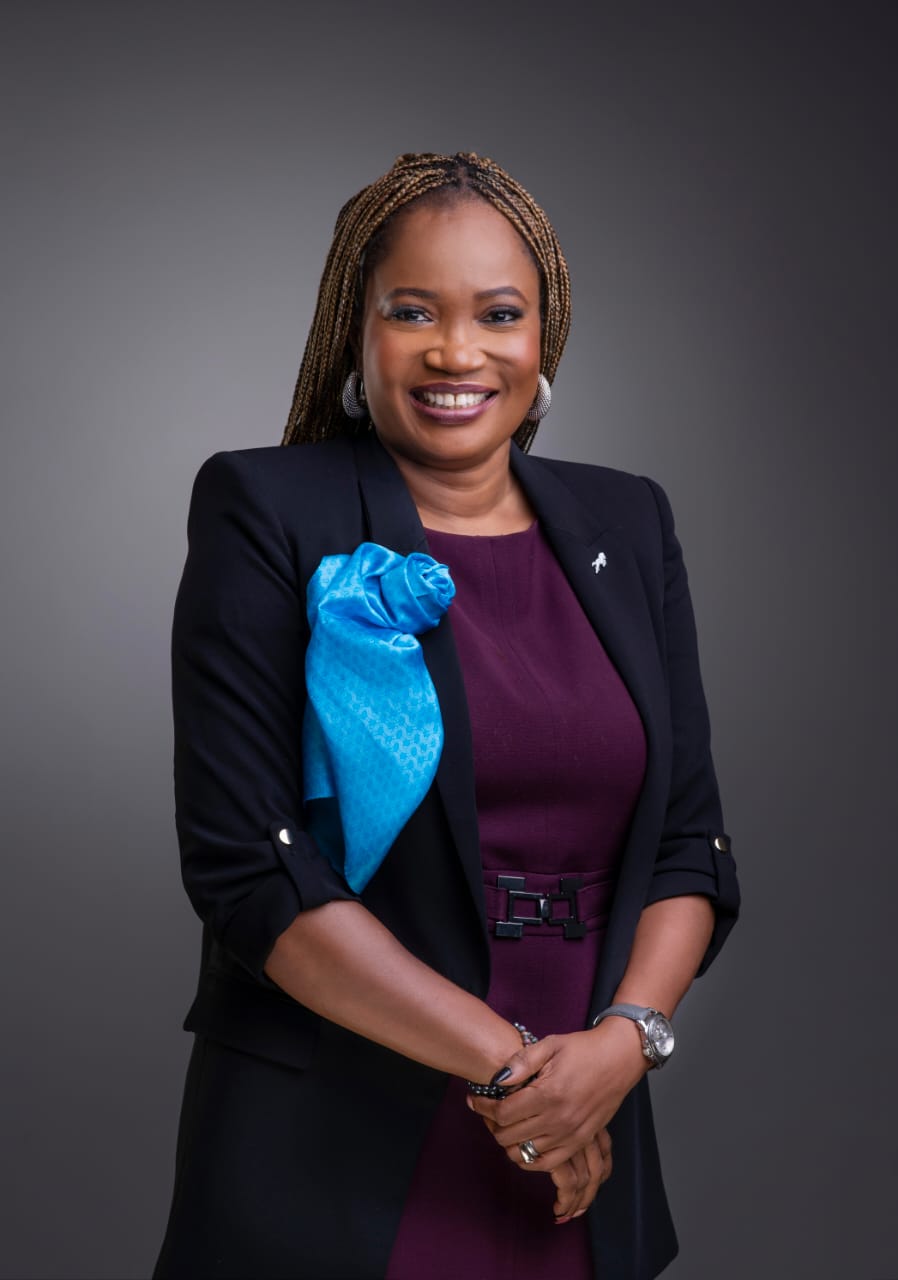
Vivian Imoh-Ita is Head, Retail & SME Business at Union Bank of Nigeria, with a focus on building retail and SME propositions that drive inclusion, growth, and long-term customer value.